


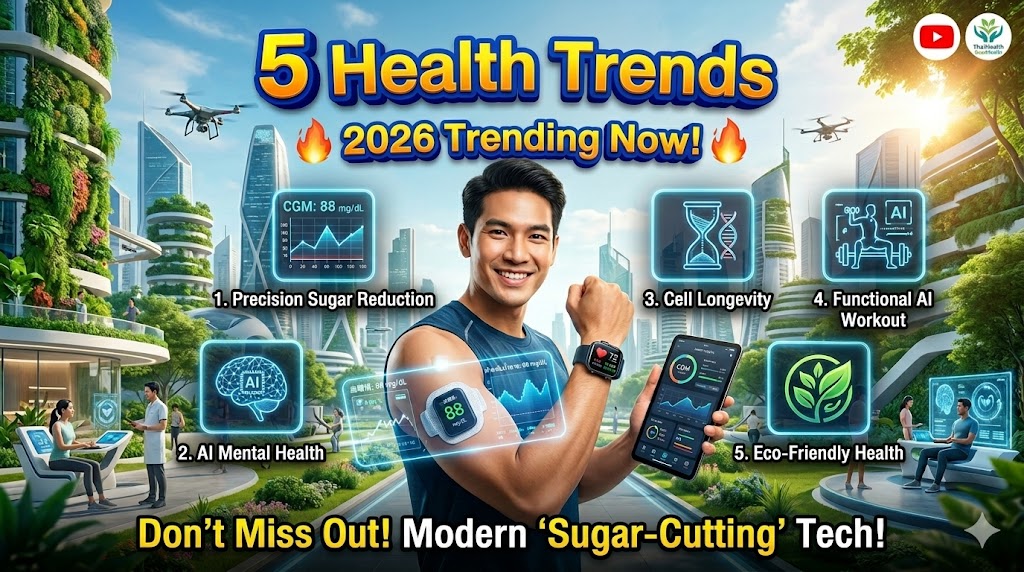
Kudos to you for staying health-conscious! In 2026, the definition of “being healthy” has evolved far beyond just hitting the gym or eating a salad. It’s now about leveraging data and technology to care for yourself at a deep, cellular level.
1. Precision Nutrition & the “Sugar Detox 2.0”
In 2026, we don’t cut sugar just because “someone said it’s bad”—we do it because we can see the data. Continuous Glucose Monitors (CGM) have become as common as smartwatches.
-
Sugar is the New Smoking: Sugar is now recognized as the primary culprit behind chronic inflammation and premature aging. The trend has shifted toward Bio-sweeteners that don’t spike insulin or disrupt the gut microbiome.
-
Data-Driven Eating: You’ll know exactly how much that boba tea spikes your blood sugar and precisely how many steps you need to take to stabilize it.
2. Longevity Science
It’s no longer just about living longer; it’s about staying “young” for as long as possible. Biohacking has gone mainstream, focusing on:
-
Bio-age Monitoring: Tracking your “internal age” to see if your organs are older or younger than your chronological age.
-
Cellular Repair: Using supplements like NMN or NAD+ and targeted therapies to repair DNA at the source.
3. AI-Driven Neuro-wellness
As the world moves faster, stress has “upgraded.” In 2026, we have AI Health Coaches that whisper through our earbuds: “Your stress levels are rising; shall we try a 1-minute breathing exercise?” This includes using Binaural Beats and AI-generated soundscapes to optimize sleep and deep work.
4. Functional AI Fitness
Forget generic workout plans. Modern gyms use sensors and AI for Real-time Form Analysis to prevent injury. The focus has shifted to Recovery-based Training—if your wearable detects poor sleep, your AI coach will automatically swap your heavy lifting session for a restorative yoga flow.
5. Eco-Wellness
Personal health must not come at the planet’s expense. The Regenerative Diet (eating food from carbon-sequestering farms) is booming. This includes plastic-free supplement packaging and a preference for Green Exercise—working out in natural, biodiverse environments rather than sterile indoor gyms.
