


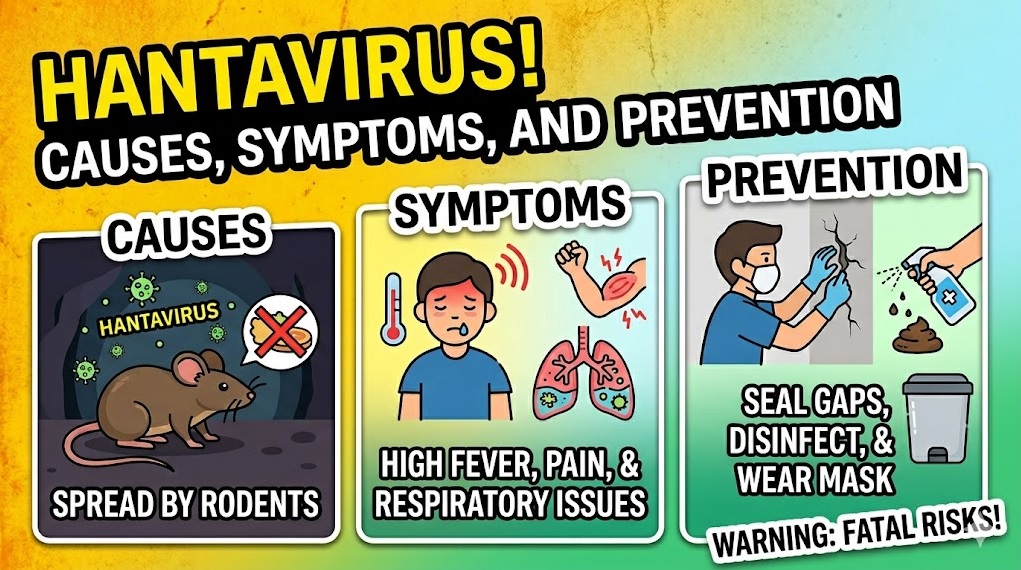
Hantavirus is a zoonotic virus transmitted from animals to humans, with “rodents” (rats and mice) serving as the primary vectors. Although human infections are relatively rare, the disease can be severe and potentially fatal.
Here is a concise and easy-to-understand summary of its causes, symptoms, and prevention methods:
1. Causes and Transmission
Hantavirus does not typically spread from person to person (with the rare exception of the Andes strain in South America). Instead, humans contract the virus from rodents through:
-
Inhalation (Primary Route): Breathing in airborne droplets or dust contaminated with rodent urine, droppings, or saliva.
-
Direct Contact: Touching rodent droppings, urine, or nesting materials, and then touching the eyes, nose, or mouth.
-
Rodent Bites: Being directly bitten by an infected rodent.
-
Ingestion: Consuming food or water contaminated with rodent excretions.
2. Symptoms of Infection
Symptoms vary depending on the specific strain of the virus and are generally categorized into two main syndromes:
1) Hantavirus Pulmonary Syndrome (HPS)
Predominantly found in the Americas, this syndrome carries a high mortality rate.
-
Early Stage (Flu-like symptoms): Fever, chills, severe muscle aches (especially in the hips, back, and thighs), headaches, dizziness, diarrhea, and vomiting.
-
Late Stage (Developing 4–10 days later): Coughing, coughing up blood, and rapidly progressing shortness of breath due to fluid accumulation in the lungs (pulmonary edema), which can lead to heart failure.
2) Hemorrhagic Fever with Renal Syndrome (HFRS)
Commonly found in Asia (including Thailand) and Europe.
-
Early Stage: Sudden high fever, severe headache, back and abdominal pain, bloodshot eyes (conjunctival injection), and skin rashes.
-
Late Stage: A sharp drop in blood pressure leading to shock, and acute kidney failure, characterized by a significant decrease in urine output or blood in the urine (hematuria).
⚠️ Caution: The incubation period for this virus is quite broad, ranging from 1 to 8 weeks after exposure. Consequently, patients often cannot recall when or where they encountered a rodent.
3. Prevention Methods
Because there is currently no specific vaccine or antiviral treatment available (treatment relies entirely on supportive care), the most effective approach is rodent control and avoidance.
🏡 Home and Workplace Management
-
Seal Entry Points: Block gaps, holes, or cracks in walls, doors, and ceilings where rodents could enter.
-
Eliminate Food Sources: Store human and pet food in tightly sealed containers. Wash dishes immediately after use and dispose of garbage in bins with secure lids.
-
Remove Nesting Sites: Clear away woodpiles, trash heaps, or tall weeds around the property where rodents might nest.
🧹 Cleaning Precautions for Rodent-Infested Areas (Crucial!)
Never use a broom or a vacuum cleaner in areas with rodent droppings. Doing so stirs up the dust, causing the virus to become airborne and easily inhaled.
-
Wear Protective Gear: Always wear a face mask (an N95 mask is highly recommended) and rubber gloves.
-
Disinfect First: Spray a household bleach solution (1 part bleach to 10 parts water) or a disinfectant directly onto the droppings or urine until thoroughly wet. Let it sit for 5–10 minutes to kill the virus and prevent dust from rising.
-
Wipe and Dispose: Use paper towels or a cloth to wipe up the mess. Place the waste in a plastic bag, seal it tightly, and dispose of it immediately.
-
Sanitize Yourself: Wash your hands thoroughly with soap and water right after removing the gloves.
