


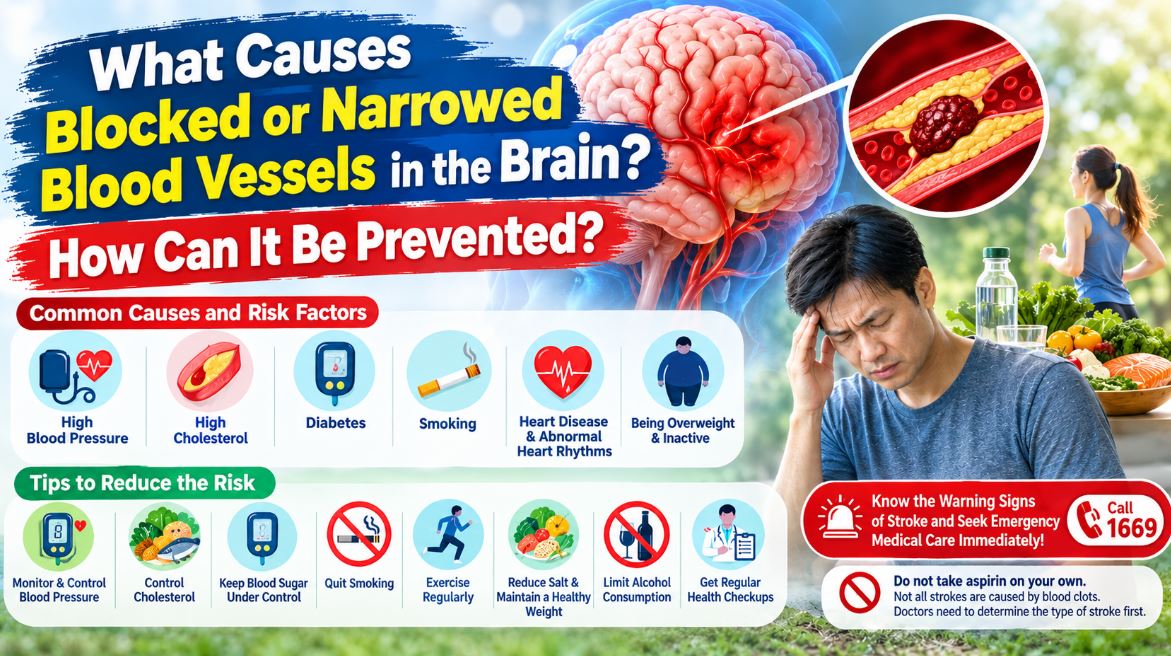
Narrowed or blocked blood vessels in the brain, commonly associated with ischemic stroke, occur when a blood vessel supplying the brain becomes narrowed or blocked by a blood clot. As a result, part of the brain does not receive enough oxygen and nutrients. If blood flow is not restored quickly, brain cells can become permanently damaged.
What Causes Narrowed or Blocked Blood Vessels in the Brain?
Several factors can increase the risk of ischemic stroke.
1. High Blood Pressure
High blood pressure is one of the most important risk factors for stroke. Long-term high blood pressure can damage the walls of blood vessels, making them more likely to become narrowed or blocked.
2. High Cholesterol
High levels of LDL cholesterol can contribute to the buildup of fatty deposits inside the walls of blood vessels. Over time, this can narrow the arteries and increase the risk of blood clots.
3. Diabetes
Persistently high blood sugar can damage blood vessels and increase the risk of cardiovascular disease and stroke. People with diabetes may also have other risk factors, such as high blood pressure and abnormal cholesterol levels.
4. Smoking
Smoking damages blood vessels and can increase the risk of blood clots and stroke. Quitting smoking is an important step toward protecting cardiovascular and brain health.
5. Heart Disease and Abnormal Heart Rhythms
Certain heart conditions, particularly atrial fibrillation (AF), can cause blood clots to form in the heart. A clot may travel through the bloodstream and block an artery in the brain.
6. Being Overweight and Physically Inactive
Being overweight, exercising too little, and following an unhealthy diet can contribute to high blood pressure, diabetes, and high cholesterol—all of which can increase the risk of stroke.
How Can You Reduce the Risk of Stroke?
Although some risk factors cannot be changed, many lifestyle-related factors can be managed.
1. Monitor and Control Your Blood Pressure
Check your blood pressure regularly because high blood pressure often has no obvious symptoms. If you have been prescribed medication, take it as directed by your doctor and do not stop taking it on your own.
2. Control Your Cholesterol
Have your cholesterol levels checked regularly. Reduce foods high in saturated and trans fats and include more fiber-rich foods such as vegetables, fruits, whole grains, beans, and nuts.
3. Keep Blood Sugar Under Control
People with diabetes should monitor their blood sugar and follow their healthcare provider’s treatment plan. Maintaining healthy blood sugar levels can help reduce damage to blood vessels.
4. Quit Smoking
Stopping smoking can significantly reduce cardiovascular and stroke risk. Avoiding exposure to secondhand smoke is also beneficial.
5. Exercise Regularly
Adults are generally advised to engage in around 150 minutes of moderate-intensity aerobic activity per week, such as brisk walking, cycling, or swimming. Exercise should be adjusted according to your health and physical condition.
6. Reduce Salt and Maintain a Healthy Weight
Reducing sodium intake can help control blood pressure. Maintaining a healthy weight can also help lower the risk of high blood pressure, diabetes, and abnormal cholesterol levels.
7. Limit Alcohol Consumption
Excessive alcohol consumption can raise blood pressure and increase the risk of stroke. Limiting alcohol intake is therefore an important part of maintaining cardiovascular health.
8. Get Regular Health Checkups
Regular health checkups can help identify risk factors such as high blood pressure, high cholesterol, and high blood sugar. People with heart conditions or symptoms such as an irregular heartbeat should consult a healthcare professional for appropriate evaluation.
Warning Signs of Stroke: Seek Emergency Medical Care
Do not wait for symptoms to disappear if they occur suddenly. Warning signs may include:
- Facial drooping or weakness on one side of the face
- Sudden weakness or numbness in one arm or leg
- Slurred speech, difficulty speaking, or difficulty understanding speech
- Sudden dizziness or loss of balance
- Sudden changes in vision
- A sudden, severe headache that is unusual for the person
One way to remember the warning signs is B.E. F.A.S.T.:
- B – Balance: Sudden loss of balance or coordination
- E – Eyes: Sudden vision problems
- F – Face: Facial drooping
- A – Arm: Arm weakness or numbness
- S – Speech: Speech difficulties
- T – Time: Seek emergency medical help immediately
In Thailand, call 1669 for emergency medical assistance.
Do Not Take Aspirin on Your Own
Do not self-medicate with aspirin when stroke symptoms occur. Not all strokes are caused by blood clots; some are caused by bleeding in the brain. Doctors need to determine the type of stroke before deciding whether aspirin or another treatment is appropriate.
Conclusion
Narrowed or blocked blood vessels in the brain can have serious consequences, but many risk factors can be reduced through healthy lifestyle choices. Controlling blood pressure, blood sugar, and cholesterol, avoiding smoking, exercising regularly, maintaining a healthy weight, reducing salt intake, limiting alcohol, and having regular health checkups can all help lower the risk of stroke.
Most importantly, if sudden stroke symptoms occur, seek emergency medical care immediately. Fast treatment can make a significant difference in reducing brain damage and improving recovery.
