


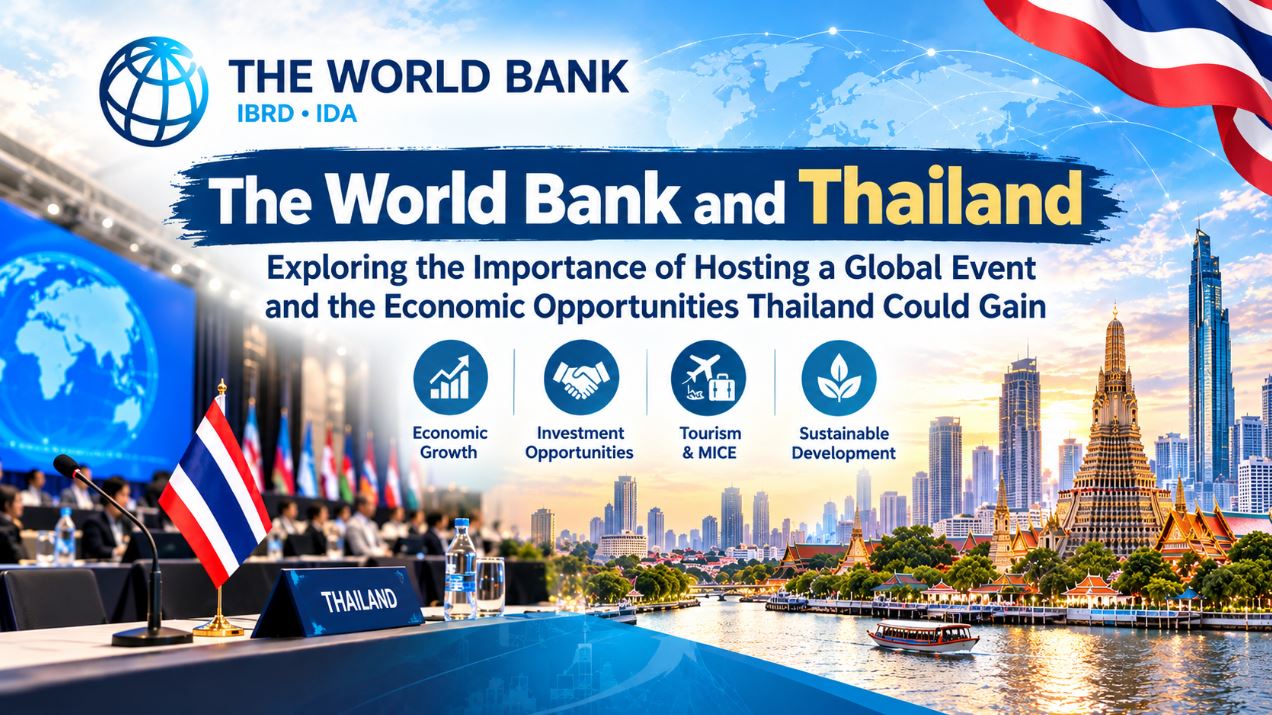
The World Bank and Thailand: Exploring the Importance of Hosting a Global Event and the Economic Opportunities Thailand Could Gain
Hosting an international event associated with the World Bank can be an important opportunity for Thailand to strengthen its position on the global economic stage. In addition to welcoming representatives from various countries and international organizations, such an event could create opportunities for investment, tourism, trade, and long-term economic development cooperation.
However, the benefits Thailand receives will depend not only on the number of participants but also on the preparedness of the government and private sector, as well as the country’s ability to turn international connections into tangible outcomes after the event concludes.
What Is the World Bank, and Why Is It Important to the Global Economy?
The World Bank is an international financial institution that supports economic and social development in countries around the world. Its primary objectives include reducing poverty, improving living standards, developing infrastructure, and promoting sustainable economic growth.
The World Bank works with governments, businesses, and international development organizations by providing financing, technical expertise, policy advice, and support for development projects in various sectors, including education, public health, energy, and climate change mitigation.
For this reason, international meetings and events associated with the World Bank provide a platform for countries to exchange perspectives on the global economy, development challenges, and strategies for addressing emerging issues.
Why Is Hosting a Global Event in Thailand Important?
Thailand has several advantages, including its strategic location in Southeast Asia, transportation infrastructure, service industries, and tourism sector. Hosting an international conference can therefore create opportunities for the country in several important areas.
1. Enhancing Thailand’s International Image
Hosting an event attended by representatives from different countries can provide Thailand with an opportunity to showcase its economic potential, infrastructure, technology capabilities, and readiness to become a regional hub for international meetings.
It also allows Thailand to demonstrate its ability to coordinate effectively among government agencies, private-sector organizations, and international institutions.
2. Creating Business and Investment Opportunities
International conferences can serve as starting points for business negotiations, knowledge exchange, and networking between foreign investors and Thai entrepreneurs.
Potential beneficiaries include businesses in hospitality, finance, technology, logistics, clean energy, and sustainable development. However, actual investment outcomes will depend on the broader business environment, government policies, and the continuity of international cooperation.
3. Stimulating Economic Activity Through Travel and Events
International participants may generate revenue for hotels, restaurants, airlines, transportation companies, event organizers, and technical service providers.
If Thailand successfully integrates conference activities with tourism opportunities, participants may extend their stays, helping distribute economic benefits to a wider range of local businesses.
Economic Opportunities Thailand Could Gain
1. Revenue from the MICE and Tourism Industries
The MICE industry—which includes meetings, incentive travel, conventions, and exhibitions—is one of the sectors that can connect global events with the domestic economy.
Large-scale events generate demand for a wide range of services, including accommodation, food, transportation, interpretation, security, and venue management.
If Thailand delivers a positive experience for international participants, it could improve its prospects of being selected to host future international conferences and events.
2. Opportunities for Thai Entrepreneurs
Thai entrepreneurs may benefit from access to international business networks, particularly small and medium-sized enterprises (SMEs) with the potential to introduce their products, services, and innovations to new markets.
For example, financial technology companies, clean energy businesses, digital solution providers, and innovative food producers could use related events to establish business connections and explore potential partnerships.
However, entrepreneurs need to prepare comprehensive business information, meet relevant product and service standards, and develop market expansion strategies to turn networking opportunities into tangible business outcomes.
3. Building Long-Term Investment Opportunities
Beyond the immediate revenue generated during an event, Thailand can use international platforms to present its economic development plans, infrastructure projects, and investment opportunities in targeted industries.
Exchanging information with international experts and organizations may introduce new approaches to national development, support policy improvements, and strengthen Thailand’s competitiveness.
Nevertheless, hosting a single event does not automatically guarantee new investment. Consistent follow-up, investor confidence, and a supportive business environment are essential for achieving lasting results.
Challenges Thailand Needs to Address
Although international events can create numerous opportunities, they also involve costs and challenges that require careful consideration.
- Budget and cost-effectiveness: The costs of hosting the event should be assessed alongside its potential economic benefits.
- Transportation and visitor services: Efficient arrangements are needed for transportation, accommodation, security, and communication with international participants.
- Distribution of economic benefits: Small businesses and local enterprises should have opportunities to participate and benefit.
- Post-event outcomes: Follow-up mechanisms should track business partnerships, investments, and development projects that emerge from the event.
Success should therefore be evaluated through both short-term economic activity and long-term outcomes, rather than relying solely on attendance figures or spending during the conference.
Conclusion: Thailand’s Opportunity Lies in What Happens After the Event
Hosting an international event associated with the World Bank can provide Thailand with an important opportunity to showcase its capabilities, strengthen business networks, and enhance its international reputation.
With systematic planning and consistent follow-up, Thailand could turn the opportunities created by such an event into economic growth, stronger international cooperation, and improved national competitiveness over the long term.
Ultimately, success should not be measured solely by Thailand’s ability to host a global event. It should also be measured by the tangible benefits delivered to businesses, local communities, the public, and the country’s economy as a whole.
