


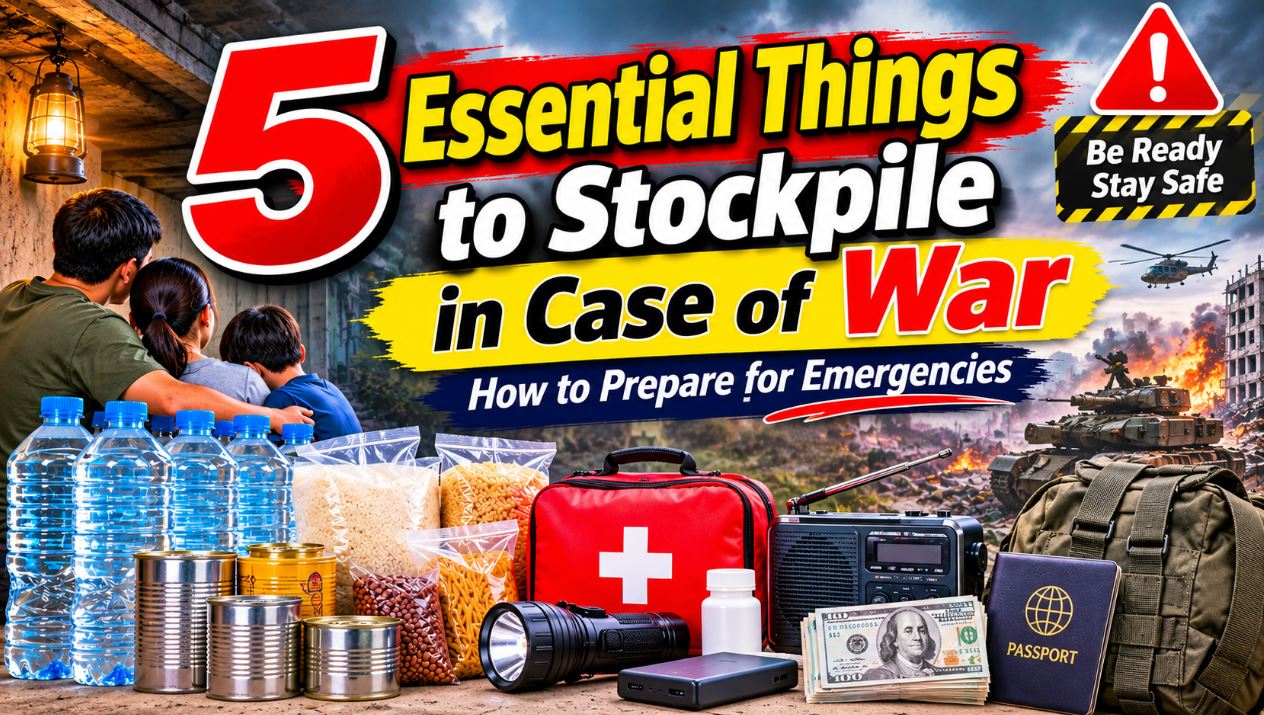
Preparing essential supplies in advance is therefore extremely important. Every household should consider keeping enough supplies to survive for at least 7–14 days.
Here are five essential things you should stockpile in preparation for war or a major emergency.
1. Drinking Water and Clean Water
Water is the most essential resource for human survival. If water treatment facilities or distribution systems are damaged, people may struggle to access safe drinking water.
Essential supplies to prepare:
-
Bottled drinking water
-
Large water storage containers with secure lids
-
Water filtration systems or emergency water filters
-
Water purification tablets approved for drinking water
Recommended quantity: Store at least 3–4 liters of water per person per day for drinking and basic hygiene. Ideally, prepare enough for at least seven days.
2. Dried Foods and Long-Lasting Food Supplies
During wartime, transportation networks may be disrupted, grocery stores may close, and fresh food may become expensive or difficult to obtain.
Having an emergency food supply ensures that your family can survive without relying on regular grocery shopping.
Recommended food supplies:
-
Rice and other grains
-
Instant noodles
-
Canned fish and canned food
-
Dried beans and high-protein foods
-
UHT milk
-
Ready-to-eat meals
-
Baby food and special foods for elderly family members, if needed
Tip: Choose foods that can be eaten immediately or require minimal water and energy to prepare. Always check expiration dates and rotate your food supplies regularly.
3. Essential Medicines and First Aid Supplies
During a war, hospitals and medical facilities may become overcrowded, making access to healthcare more difficult. Keeping essential medicines and first aid supplies at home can help you deal with minor illnesses and injuries.
Recommended medical supplies:
-
Pain relievers and fever-reducing medicine
-
Antihistamines for allergies
-
Anti-diarrheal medicine and oral rehydration salts (ORS)
-
Prescription medications for existing medical conditions
-
Adhesive bandages and gauze
-
Wound antiseptics
-
Face masks and medical gloves
-
Thermometer
Tip: People who require regular medication should maintain an adequate supply and store medicines according to the instructions provided by healthcare professionals.
4. Lighting Equipment and Backup Power Supplies
If power plants or electrical infrastructure are damaged during a conflict, communities may experience power outages lasting several days or longer.
Backup power and lighting equipment can help you maintain communication, access important information, and carry out essential daily activities.
Recommended supplies:
-
LED flashlights
-
Spare batteries
-
High-capacity power banks
-
Battery-powered or hand-crank emergency radios
-
Rechargeable emergency lanterns
-
Portable solar panels
-
Spare phone charging cables
Tip: Keep a radio that can receive official emergency broadcasts. This is especially important when internet access and mobile networks are unavailable.
5. Cash, Important Documents, and Survival Equipment
During wartime, banking systems, ATMs, and online payment services may become unavailable. You may also need to evacuate your home at short notice.
Essential items to prepare:
-
Cash in small denominations
-
Copies of identification cards and important documents
-
Passport, if available
-
Spare clothing and comfortable walking shoes
-
Soap, toothpaste, and toilet paper
-
Protective masks for dust
-
Emergency whistle
-
Folding knife or multi-purpose tool
-
Emergency evacuation backpack (Go Bag)
Tip: Keep important documents in waterproof bags and prepare an emergency backpack that you can grab and carry immediately if you need to leave home.
Summary: 5 Essential Things to Stockpile Before War
| Essential Supplies | Why They Matter |
|---|---|
| Drinking water and clean water | Prevents water shortages and dehydration |
| Dried food and canned food | Provides emergency food supplies |
| Medicines and first aid supplies | Helps manage illnesses and injuries |
| Flashlights and backup power | Provides lighting and communication during power outages |
| Cash and survival equipment | Supports evacuation and emergencies when payment systems fail |
Additional Safety Tips During Wartime
Stockpiling essential supplies is important, but there are several other precautions that every household should consider.
-
Follow official government announcements and emergency alerts.
-
Plan evacuation routes and establish family meeting points.
-
Stay away from dangerous areas and locations where fighting is taking place.
-
Never approach suspicious objects or unexploded ordnance.
-
Avoid excessive stockpiling, as panic buying can create shortages for other people.
Conclusion
War is a situation that nobody wants to experience. However, preparing in advance is something every household can do.
Keeping sufficient supplies of drinking water, food, medicine, backup power, and cash at home can significantly improve your ability to cope with emergencies and unexpected disruptions.
Being prepared does not mean living in fear. It means having a plan to protect yourself and the people you love.
