


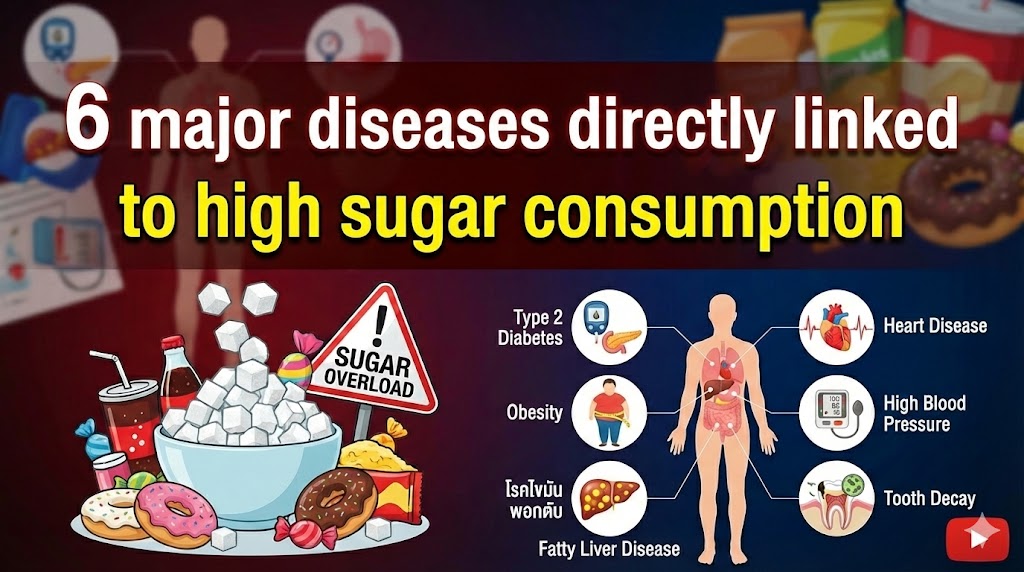
Consuming too much sugar doesn’t just impact your weight; it is a primary driver of Non-Communicable Diseases (NCDs) that can cause long-term harm to your body. Here are 6 major diseases directly linked to high sugar consumption:
1. Type 2 Diabetes
This is the most well-known link. When we consume excessive sugar, the body releases insulin to manage blood glucose levels. Over time, frequent sugar spikes cause cells to become “insulin resistant.” This leads to chronically high blood sugar levels, eventually resulting in Type 2 Diabetes.
2. Obesity
Excess sugar that the body cannot burn for energy is converted by the liver into stored fat, particularly around the abdomen (visceral fat). Furthermore, sugar interferes with Leptin, the hormone responsible for signaling fullness, making it harder to stop eating and leading to overconsumption.
3. Non-Alcoholic Fatty Liver Disease (NAFLD)
Fructose (commonly found in sugary drinks and syrups) is processed almost exclusively by the liver. When consumed in excess, the liver converts this sugar into fat, which accumulates in liver cells. This can lead to inflammation and liver scarring, even in individuals who do not drink alcohol.
4. Heart Disease
High sugar intake is linked to increased levels of triglycerides and “bad” cholesterol (LDL). It also triggers chronic inflammation in the blood vessels, which is a major risk factor for clogged arteries and heart attacks.
5. Hypertension (High Blood Pressure)
Research suggests that sugar—specifically fructose—may impact blood pressure even more than salt. High sugar intake increases uric acid levels in the blood, which inhibits the production of nitric oxide (a molecule that helps blood vessels relax and dilate). This causes vessels to constrict, raising blood pressure.
6. Dental Caries (Tooth Decay)
Sugar is the primary food source for harmful bacteria in the mouth. When these bacteria digest sugar, they produce acid as a byproduct. This acid eats away at tooth enamel, leading to cavities and gum disease.
