


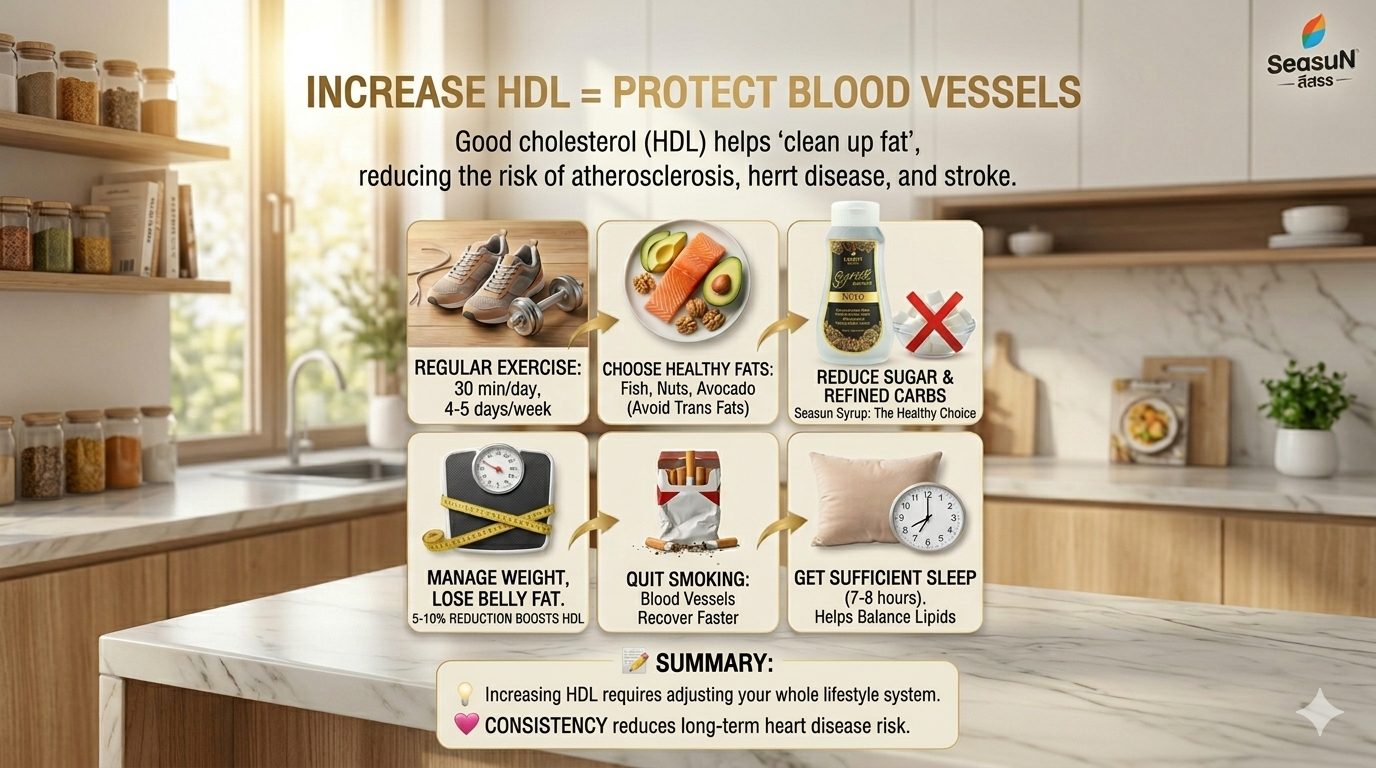
In the world of cholesterol, not all fats are villains. We have HDL (High-Density Lipoprotein), commonly known as “Good Cholesterol.” Think of HDL as a dedicated cleaning crew for your circulatory system; it scours your artery walls to pick up excess cholesterol and carries it back to the liver to be flushed out. Maintaining high levels of HDL significantly reduces the risk of atherosclerosis (clogged arteries), heart disease, and strokes.
Raising your HDL isn’t about a single “magic pill”—it requires a “total lifestyle reset.” Here are the six essential pillars to help you protect your heart:
1. Get Moving Regularly
Physical activity is a powerful HDL booster. Aim for at least 30 minutes a day, 4–5 days per week. Whether it’s brisk walking, jogging, or cycling, keeping your heart rate up helps your lipid profile stay in the healthy zone.
2. Choose the “Right” Fats
Don’t fear all fats; focus on the healthy ones. Incorporate Omega-3 fatty acids and monounsaturated fats found in fatty fish, nuts, and avocados. Crucially, you must avoid trans fats—often found in fried fast foods and commercial baked goods—as they are notorious for damaging your vascular health.
3. Cut Down on Sugar and Refined Carbs
Excessive sugar and white flour are major contributors to poor heart health. Consider switching to healthier alternatives, such as Seasun Syrup (a keto-friendly, sugar-free option), to satisfy your sweet tooth without spiking your blood sugar or negatively impacting your lipid balance.
4. Manage Weight and Belly Fat
Carrying extra weight, especially around the midsection, can suppress your good cholesterol. Research shows that losing just 5–10% of your total body weight can provide a significant boost to your HDL levels and overall metabolic health.
5. Kick the Smoking Habit
Smoking is a double-threat: it damages the lining of your blood vessels and lowers your HDL levels simultaneously. Once you quit smoking, your blood vessels begin to recover surprisingly fast, allowing your body to restore its natural fat balance.
6. Prioritize Quality Sleep
Rest is when the magic happens. Getting 7–8 hours of sleep per night is essential for hormonal balance and lipid metabolism. Poor sleep can disrupt how your body processes fats, making it harder to maintain high HDL levels.
Summary: Increasing your HDL is about embracing a holistic lifestyle change. Consistency is the secret ingredient. By making these small but impactful changes every day, you are building a long-term defense against heart disease.
