


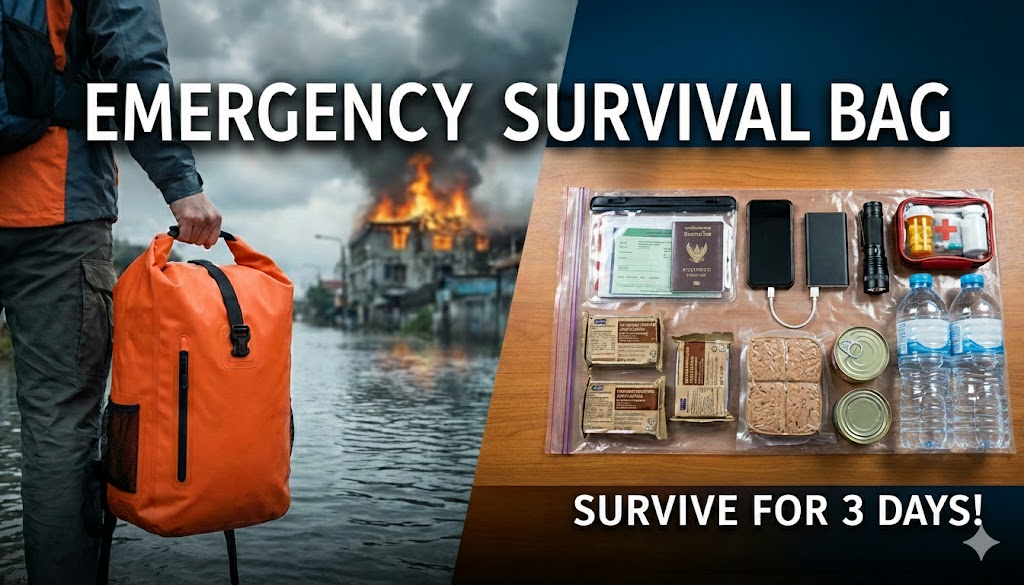
Disasters don’t wait for anyone! Here’s a complete checklist for an Emergency Survival Kit—a life-changing essential every household should have.
We never know when unexpected events like flash floods, fires, or earthquakes will strike. But one thing we can prepare in advance is an Emergency Survival Kit, often called a “72-Hour Bag.” This kit can help you and your family survive the critical period when help has not yet arrived.
This article will guide you through what should be inside the kit—and why each item is vital to your survival.
Why “3 Days” (72 Hours)?
International disaster guidelines emphasize that the first 72 hours after a disaster are the most critical. During this time, essential infrastructure such as electricity, water supply, and communication systems may be disrupted, and rescue teams may not yet be able to reach affected areas. Having supplies ready significantly reduces the risks of injury, hunger, and dehydration.
5 Essential Categories for Your Emergency Survival Kit
1. Important Documents (Store in Waterproof Bags)
In times of chaos, identity documents help you access medical care and receive government or emergency assistance more quickly.
Prepare:
Copies of your ID card/passport, household registration, insurance policies, bank account documents, and medical allergy records.
2. Communication and Lighting Equipment
When power is out, information and light help reduce panic and increase safety.
-
Mobile phone & power bank: Keep fully charged to contact emergency services and follow official updates.
-
Flashlight with spare batteries: Choose a waterproof model or a hand-crank flashlight as backup.
3. Basic Medicines and Personal Medication
Illness and injury are more likely during stressful situations and changing environments.
-
Basic medicines: Pain relievers, fever reducers, anti-diarrheal medication, oral rehydration salts, and a basic first-aid kit.
-
Personal medication: If you have chronic conditions, prepare at least a 7-day supply.
4. Dry Food and Drinking Water
Focus on high-energy food that requires no cooking.
-
Ready-to-eat food (MRE): Easy-open canned food, protein bars, instant noodles—enough for 3 days.
-
Clean drinking water: At least 3 liters per person per day (for drinking and basic hygiene).
5. Survival Accessories
Small items can make a big difference in emergencies.
-
Whistle: For signaling rescuers when you need help.
-
Face masks: Protect against dust, smoke, or airborne germs in shared shelters.
Tips for Storage and Maintenance
-
Placement: Keep the kit in an easy-to-reach location, such as near the front door or beside the bed.
-
Check every 6 months: Set a reminder to inspect expiration dates of food and medicine and test power banks.
-
Bag weight: Make sure it’s light enough to carry while walking or evacuating long distances.
Conclusion
Preparing an emergency survival kit may seem unnecessary—until disaster strikes. In that critical moment, this single bag could mean the difference between survival and loss. Start preparing today for the safety and peace of mind of yourself and your loved ones.
