


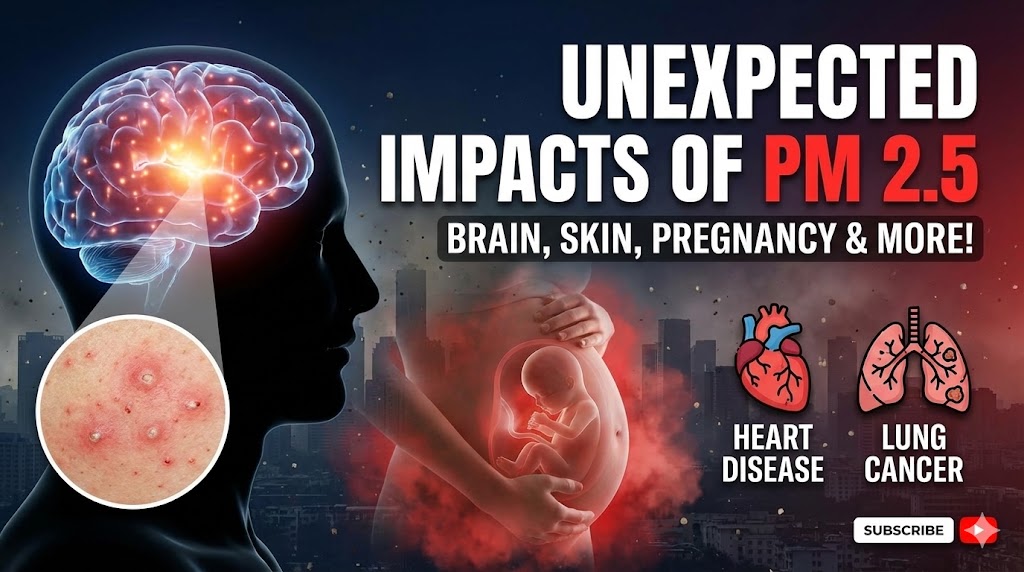
PM 2.5 is extremely hazardous to health and affects many areas that you might not expect. Beyond general respiratory irritation, the impacts that many people overlook or are unaware of include:
🤯 Impacts on Major Body Systems (Often Overlooked)
-
Brain and Nervous System:
-
PM 2.5 particles can penetrate into the bloodstream and directly affect the brain.
-
Increases the risk of brain diseases: Such as Alzheimer’s and Parkinson’s disease.
-
Affects brain function: May worsen memory, lower cognitive abilities, and cause concentration problems (attention deficit).
-
Increases the risk of stroke: Such as ischemic stroke (blocked artery) or hemorrhagic stroke (burst artery).
-
-
Skin:
-
Fine particulate matter can enter pores and hair follicles.
-
Causes skin inflammation: Such as itchy rashes, acne, and dermatitis.
-
Accelerates premature aging: Resulting in dull skin and wrinkles developing faster than normal.
-
-
Immune System:
-
PM 2.5 suppresses immune system function.
-
Makes you fall ill more easily: The body becomes susceptible to infections and recovers more slowly from illness.
-
Triggers allergic symptoms: Increases the severity of existing allergic reactions.
-
-
Eyes:
-
In addition to irritation and redness, dust also damages the tear film.
-
Increases the risk of eye diseases: Such as dry eyes, pterygium (surfer’s eye), pinguecula, and styes.
-
🤰 Impacts on Vulnerable Groups
-
Pregnant Women and Fetuses:
-
PM 2.5 affects the fetus in the womb.
-
Increases the risk of preterm birth
-
Low birth weight
-
Delayed brain development
-
Increases the chance of miscarriage
-
⚠️ Long-term Impacts on Serious Diseases
While short-term effects include respiratory and eye symptoms, the long-term impact is a significantly increased risk of serious diseases:
-
Cardiovascular Disease: Dust enters the bloodstream, causing blood vessel inflammation and plaque buildup, leading to ischemic heart disease, arrhythmia (irregular heartbeat), and acute heart failure.
-
Lung Cancer: Long-term exposure to PM 2.5 significantly increases the risk of lung cancer.
-
Chronic Lung Disease: Such as emphysema and Chronic Obstructive Pulmonary Disease (COPD).
Self-protection is therefore extremely important because PM 2.5 affects almost every system in our body.
